How to Read a River's Current Before You Swim or Kayak
Stand on a riverbank for two minutes and the water looks like one continuous sheet of moving glass. Stand there for ten and it starts to look like a map. The surface is not decoration; it is a report on everything happening underneath — where the bed drops away, where a boulder sits, where the current slows enough to be safe, where it accelerates into something you do not want to meet. Learning to read that report takes practice, but the vocabulary is small. Most of it comes down to texture, shape, and the seams where two different speeds of water meet.
You do not need to be a whitewater paddler to use this. Swimmers, packrafters, anglers and parents watching kids near a bend all benefit from the same habits. The point is to look before you commit, and to know what you are looking at.
Start With the Surface
Water texture tells you what the bed is doing. A long, glassy slick usually means deep, fast water moving as one mass — nothing below is breaking the flow. That can be perfectly pleasant, but a glassy tongue above a drop is a different animal, because it is smooth right up to the point where it isn't.
Riffles are the opposite: choppy, broken, sparkling patches where shallow water runs over gravel and small stones. They are usually the shallowest line across a river and the easiest place to wade, but they also grab kayak hulls and hide the occasional larger rock.
Then there are the features that stay in one place while the water rushes through them. A standing wave is not travelling downstream; it is a fixed shape created by fast flow over a rocky bed. The bigger and more unbroken the wave, the more water is being pushed through that slot. Foam that sits still and churns in a ring, with a dome of water rising in the middle, is a boil — an upwelling from something large on the bottom. Boils are worth noting: they mark obstructions and they can shove a swimmer or a small boat sideways.
Small dimples that appear and vanish, swirling leaves caught in a slow rotation, a scattering of foam drifting upstream along one edge — these are eddies forming and collapsing, and they are the most useful thing on the river to learn.
The Shapes Around Rocks: V's, Pillows and Holes
The upstream V
When current splits around a rock, it forms a V. The point of the V aims upstream, at the rock itself. So an upstream-pointing V is a warning: the obstacle is right there at the apex. An upstream V that opens into a clear channel below marks the rock's position and, often, the safer line just past it.
The pillow
A pillow is water piling up and bulging over the upstream face of a boulder, smooth and rounded, with a faint cushion of slack water at its base. It tells you three things: the rock is big, the current is strong, and there is a low-pressure pocket you can sometimes tuck into. If the pillow is large and the water behind it looks like it disappears into the rock rather than around it, you may be looking at an undercut — a rock with a hollowed-out base that will hold whatever goes in.
Holes and hydraulics
Where water drops over an obstruction and curls back on itself, you get a hole. The surface signs are a smooth, unbroken tongue of water at the lip, and a line of foam below that stays put while water recirculates behind it. Small holes are playful. Wide, glassy, powerful ones are not, and the smoothness is exactly what makes them hard to read at a glance.
Eddies: Where You Want to Be
An eddy is water running the other way, usually behind an obstruction or on the inside of a bend. It is calmer, shallower and slower, and it is where paddlers stop, regroup, scout and get out. Find them by looking for the eddy line: a clear seam of foam or bubbles separating fast downstream flow from slack or upstream-moving water. Seams are visible from a long way off once your eye is tuned to them.
On a bend, the inside of the curve is normally shallower and slower, while the outside carries the speed and cuts into the bank — which is where you find undercut banks and leaning trees. Handy to know whether you are swimming, paddling or choosing a fishing spot.
One caution: eddy lines are not automatically friendly. A hard, foamy seam with a lot of water moving through it can flip a small boat or shove a swimmer under. Cross them with purpose, not by drifting in sideways.
What the Surface Won't Tell You
Some of the most serious hazards are quiet. Look for these deliberately, because the water will not point at them.
- Strainers. Fallen trees, brush and fence wire let water pass and hold everything else. Even a modest branch in fast current can pin a person. If the current runs into a tree and there is no clear way around it, get out well upstream.
- Undercut banks and rocks. Flat, glassy water sliding under a bank or into a boulder face is the tell. There is often no visible exit.
- Weirs and low-head dams. The water above can look calm and glassy right to the lip, with a recirculating hydraulic below that is very difficult to escape. Portage these, and check local rules before you go near one.
- Foot entrapment. Wading in fast water deeper than about knee height is where people get into trouble — a foot wedged between stones in moving water is a serious situation. Shuffle rather than step, keep your feet light, and stay out of current you cannot confidently stand in.
- Cold water. Mountain rivers stay cold in midsummer. Dress for the water temperature rather than the air, and expect the first plunge to take your breath.
- Rising levels. Rain upstream can lift a river hours later. Note the waterline on a rock when you arrive and check it again before you leave.
A Bank-Side Reading Routine
Give yourself five minutes before anyone gets wet. It is the cheapest safety measure available.
- Walk a little upstream and look down the whole reach, not just at the patch in front of you.
- Find the main seam — the line where fast water meets slow. That is the spine of the current.
- Trace the V's with your eyes. Note where they point and what sits at the apex.
- Watch for a full minute. Drop a leaf or a twig in and see how fast it travels and where it gets pushed. A rough rule of thumb: if floating debris moves faster than a brisk walk, the current is pushy.
- Pick your eddies — the calm pockets behind rocks, piers and bends — and identify where you would stop or climb out.
- Identify your exit before you enter, and a second one in case the first is blocked.
- Scout on foot any drop you cannot see the bottom of.
When to Walk Away
Reading a river is mostly about honesty. If you cannot point to a clean line, the answer is not to guess — it is to portage, swim somewhere slower, or come back another day. Rivers are patient; they will still be there next weekend.
The other half of the skill is experience that someone else has already earned. A short course with a local paddling club or river guide will teach you more in an afternoon than a season of squinting from the bank, and it comes with people who know that particular river's habits. Until then, stay well within what you can read, keep an eye on the water level, and treat every smooth patch of water as a question rather than an invitation.
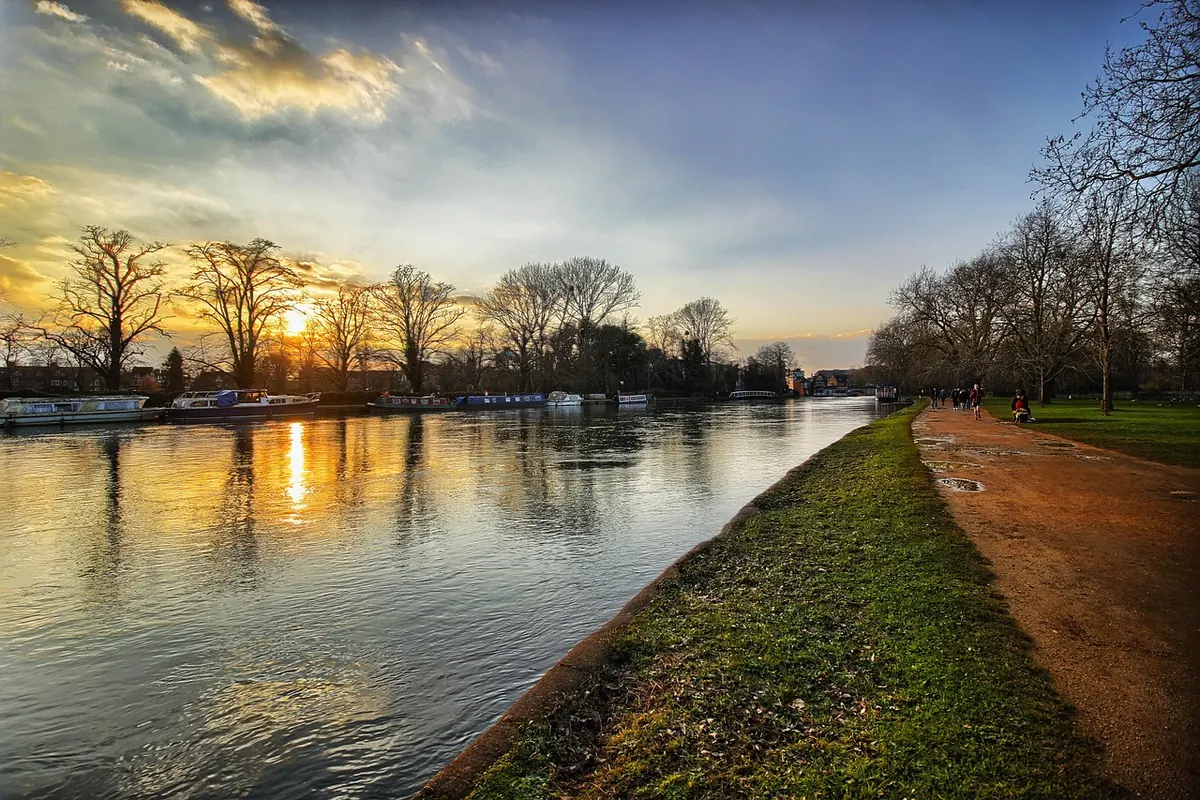
Photo: godxila / Pixabay
River Towns vs. Riverside Villages: Choosing Where to Stay for a Slow Weekend
A river town gives you a station, a market and dinner options; a riverside village gives you mist, quiet...
What to Wear for a Cold-Weather River Walk: A Seasonal Checklist
A practical, season-by-season guide to layering, footwear and small essentials so a windy, muddy or frosty...
About Us