River Towns vs. Riverside Villages: Choosing Where to Stay for a Slow Weekend
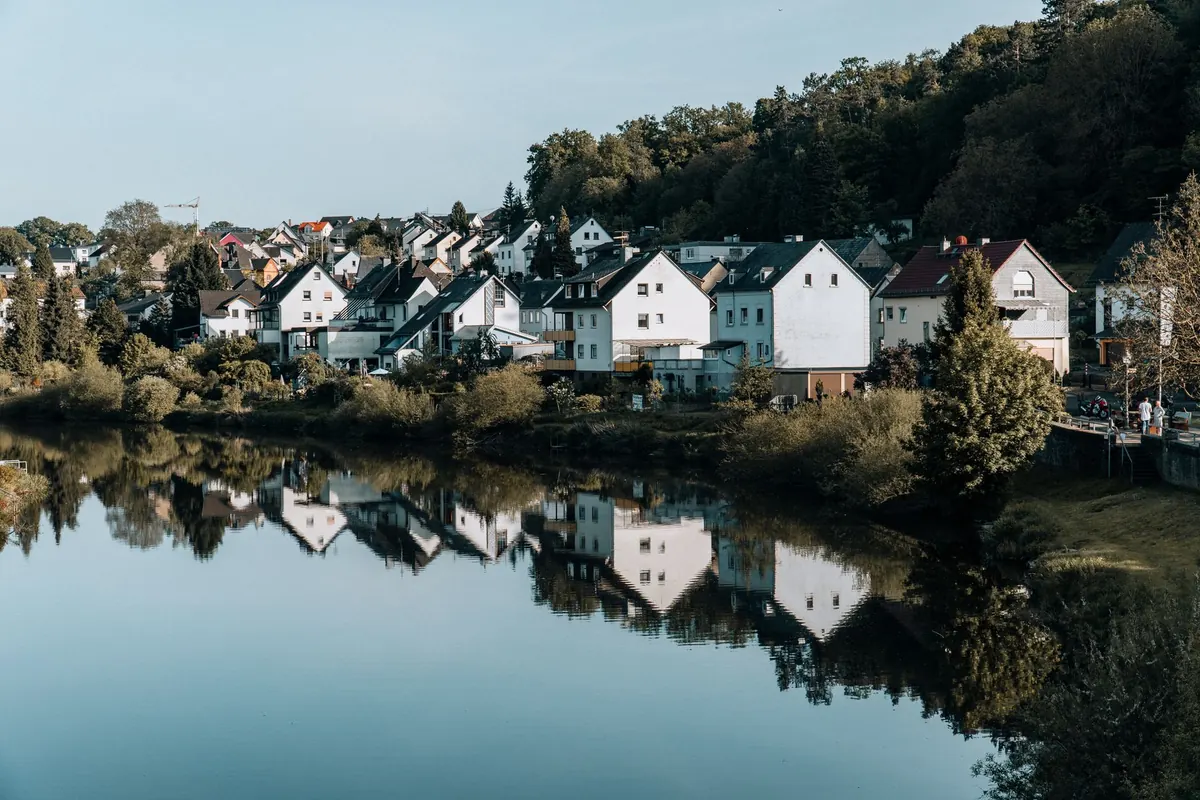
The first decision on a slow river weekend is not which stretch of water to look at, but where to sleep beside it. A river town and a riverside village can sit twenty minutes apart on the same bank and deliver entirely different weekends. One hands you a station, a market hall and three plausible dinners; the other hands you a heron at six in the morning and a shop that shuts at noon. Neither is the better choice. They answer different questions, and the trick is knowing which question you are actually asking.
Start with what the weekend is for
A slow weekend is not an austere one. It is a weekend with low friction: few decisions, short distances, nothing that requires a car at 9pm. That definition cuts both ways. A town can be too busy to be restful, and a village can be so thin on services that you spend the whole time solving logistics instead of watching water.
Three questions sort most of it out. How are you arriving, and will you need to move again once you are there? What do you want within a five-minute walk at eight in the morning and at nine at night? And how much improvisation do you genuinely enjoy when the one place serving food turns out to be closed on Tuesdays? Answer those honestly and the choice usually makes itself.
River towns: the case for a base with a station
Towns earn their keep through ordinary infrastructure. You get a rail or bus connection that does not depend on a taxi you have to book the day before, a pharmacy, a cash machine, a grocery open past seven, and usually somewhere to leave a bag before check-in. For a two-night stay, that last detail matters more than people expect.
River towns also give you weather insurance. Rain on a Saturday in a village can mean a long afternoon in one room. Rain in a town means a café with a window, a small museum, a bookshop, a covered market. You can still walk the riverbank between showers, then retreat without the day collapsing.
The river as a subject, not just a view
Towns tend to have the interpretive layer: a river or port museum, old flood markers set into walls, a bridge with a story, rowing clubs, a quay that used to handle freight. If your interest is river culture rather than river scenery, a town will show you how the water was worked, dredged, defended against and celebrated. Look for the high-water marks on the walls of low-lying streets; they are the most honest history a river town has.
What you trade away in town
Many towns turned their backs on the river decades ago. The waterfront may be an embankment road, a car park, a flood wall, or a stretch of gravel where barges tie up. The historic centre can sit a ten-minute walk inland, so your "riverside" hotel is riverside in address only.
Then there is noise: traffic on the bridge, deliveries at dawn, the dull percussion of a working quay. None of it is disqualifying, but if you came for the sound of water, a town may give you the sound of a lorry crossing it. Ask before booking where the room actually faces, and treat "river view" as a claim worth verifying on a map rather than a photograph.
Riverside villages: atmosphere you cannot book
A village of forty or two hundred people does something a town cannot. It makes the river a neighbour rather than an attraction. You hear it at night when the traffic stops. You learn its mood by the hour. The walk from bed to bank is measured in seconds, which changes how you use a weekend: you stop scheduling the river and simply live beside it.
Villages also show you the river in use rather than on display. Moorings, nets, a slipway, a garden gate opening onto the water, a small ferry that runs when someone needs it, a saint's day procession that ends at the bank. Conversations happen because there is only one bar and everyone is in it. That is the atmosphere people are chasing when they choose a village, and when it works, nothing else comes close.
The practical tax on village stays
Village charm is real; so is the administration. Before you commit, work through the awkward questions.
- Arrival and departure. Confirm how you get from the station or the road, and what you do if your train is late. A forty-minute walk along a road with no verge is fine in daylight and miserable with a suitcase at dusk.
- Food hours. Check which days the kitchen closes, whether the shop opens on Sunday, and how far the nearest alternative is. Two villages on the same river can differ completely on this.
- Where the water actually is. Some villages sit behind a levee, and a "river view" means a view of the embankment. Ask directly, or check a satellite map.
- Evenings. In smaller places, everything can close by eight, sometimes earlier outside summer. Plan one low-effort dinner option rather than hoping.
- Check-in. Self-service keys and key boxes are common; so is a host who works elsewhere during the day. Get the arrangement in writing before you travel.
- Season and water level. Ask locally about flood periods and whether access roads close. This is ordinary, sensible preparation rather than alarmism.
Which one teaches you more about the river?
Towns are better at the official story: the museum, the archive, the bridge that replaced a ferry, the flood defence that reshaped a whole district. Villages are better at the living one: how the water is used this week, by whom, and what people grumble about when the level drops.
If you can, take both. Sleep in the village and spend one afternoon in the town, arriving by the riverside path rather than the main road. You get the quiet mornings and the museum, the heron and the high-water marks. The reverse also works well for travellers without a car: base in the town, use the station, and walk or cycle out to two or three villages along the bank, returning before the light goes.
A short checklist before you book
Draw the five-minute circle around your bed and see what falls inside it: breakfast, a bench with a view, a walk that does not require a road. Read the map for the distance to the water, not the marketing copy. Confirm the arrival plan and one reliable dinner. Check whether the river path is continuous or broken by a tributary with no bridge — this is the single most common surprise on river walks.
Then decide what kind of slow you want. If you want to be looked after by a place with a station and a market, choose the town. If you want the river to be the loudest thing you hear, choose the village, and pack a little patience along with the walking shoes.
Photo: Masood Aslami / Pexels
What to Wear for a Cold-Weather River Walk: A Seasonal Checklist
A practical, season-by-season guide to layering, footwear and small essentials so a windy, muddy or frosty...

Tripod vs. Handheld: Shooting Moving Water in Daylight
A practical field guide to choosing tripod or handheld for river water — plus shutter speeds, filters and...
About Us